
Automatic language translation
Our website uses an automatic service to translate our content into different languages. These translations should be used as a guide only. See our Accessibility page for further information.
Step Together is a free support service where educators can talk through concerns, ask questions and receive practical guidance.
Whether you're unsure about what you've noticed or would simply value another perspective, we're here to help you think it through.
When you contact Step Together, you’ll speak with a team member who can help you:
Step Together is not a reporting service, and you don’t need to determine whether a student is involved in violent extremism before contacting Step Together.
If something is concerning or difficult to make sense of, seek advice early.
Start a conversation today.
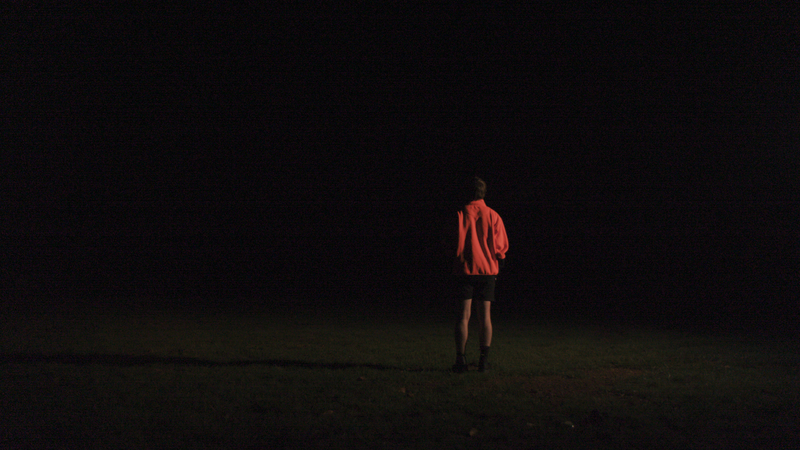
The NSW Engagement and Support Program (ESP) provides support and guidance to make positive changes and to avoid a pathway to violent extremism.
The NSW Engagement and Support Program (ESP) provides support and guidance to make positive changes and to avoid a pathway to violent extremism.
Transcription - Ollie
(young man walks into a field in the dark and looks up at the sky)
Ollie voice over: I didn't know if they're going to arrest me on the spot, I didn't know if my whole life was gone. That was definitely the worst feeling in my life.
Text on moving image: ESP SPOTLIGHT: OLLIE
Text on black slide: Ollie became vulnerable to violent extremism during COVID-19. This is his story.
(montage of Ollie by the fireplace, looking up at the sky, hands scrolling on a mobile phone, hands on a keyboard and back of head with gaming headset)
Ollie voice over: I was in high school, I was studying, I’d just moved schools. I was on the school rugby team. Had a lot of friends.
In 2020 that's when Covid started. I was definitely feeling resentful. My dad had become redundant at work.
And that meant my family was getting no money. And yeah, it's just really stressful time at home. I was stuck on the internet. I didn't have much to do.
I was spending a lot of my time on Discord, it was becoming more and more extreme, and then it moved into more of a community kind of thing rather than just looking at memes.
And once I got involved in the community, it's where things became more radical. I've certainly always been more right wing.
However, it just got way blown out of proportion. I felt like I lost control. I found the power and the attention addictive.
I found a community of people online who are equally as resentful to the system for their own reasons. And then when the second lockdown started, I found the Foodists and it got a lot more crazy. I got a lot more involved. This time I got more resentful.
I got very angry and I didn't care anymore. I was 16 years old, 15 years old. My brain was still developing. I was not fully aware of the outcomes that occured from it. I didn't know how severe they went, and I did not know how seriously it gets taken.
Text on black slide: Ollie never understood the seriousness of his activity online until law enforcement knocked on his door
(montage of Ollie sitting by the fire over shoulder shot, Ollie loading wood on the fire)
Ollie voice over: I woke up early for school one morning. I had an extension maths class early, was having a shower and I saw three people right in front of me, I didn't know what was happening. I was very scared and they told me to go to my room and put clothes on.
I followed the police to where my dad was at the table. They started showing me the court order they had to seize my devices. And, while I just sat there and didn't know what to do. It lasted from about 730 in the morning all the way to about 5 p.m., they were in my house.
My family was probably the part the made me the saddest for them to have to have police in the house. That was definitely the worst feeling in my life.
(montage of white truck driving at dusk, hand on steering wheel, over shoulder shot of fire, opening bonnet of car and tinkering with engine, walking inside a house, hands playing chess by the fire, walking outside in dark and looking up at sky)
Ollie voice over: I joined the program, as was recommended by the police who came to my door. the ESP were able to help me calm down. They were able to offer me services I needed being able to talk to someone about it, because in the few months between November when they came to my door and when I joined the program about January February, I had no one to talk to you. And it was a very, very stressful time for me. I was able to develop some coping skills for a lot of the stress also. And I developed resilience.
And that allowed me with new coping skills, to go make some friends. I was able to then go find and people I really do like going camping with my friends. I've been doing some parts of a real life. We help each other build our cars.
I was able to yeah, find a good job I got an opportunity to be promoted and I really enjoyed that. The ESP were able to help me with my parents. I would have struggled a lot more with them.
Thanks to the ESP They changed my life.
Any political community which is negative, it's just terrible for your health. It just dramatically effects the way you see the world. It affects everything you do. And yeah, it's just important that you stay positive, do things which help you and don't spend all day online.
It's not healthy. They need to stop. Even if they feel that they can’t stop. They need to stop and they need to reach out for help. If they can't, that need to be taught how permanent things are online.
It's better to get help than someone having to help you get out of prison or get out of a court case. I don't think it would have made the same progress without the ESP
And because of the knowledge I’ve learned throughout the ESP I certainly would recommend it to people who are in dark communities and having a really tough time.
I would certainly recommend the ESP as it has helped me, and I came from a pretty rough situation. I was able to come back into society. I think it's really important that everyone has a chance to do it before it’s too late.
Text on black slide: Contact ESP on: 1800 203 966
esp@dcj.nsw.gov.au
End of transcript.
“I didn't know if they're going to arrest me on the spot, I didn't know if my whole life was gone. That was definitely the worst feeling in my life… In 2020 that's when Covid started. I was definitely feeling resentful… I was stuck on the internet… things became more radical… I felt like I lost control. I found the power and the attention addictive… My family was probably the part that made me the saddest for them to have to have police in the house… I don't think I would have made the same progress without the ESP… Thanks to the ESP. They changed my life.”
Research shows (PDF, 656.0 KB) strong teacher-student connections boost emotional development, wellbeing and help-seeking.
How to have safe and proactive conversations surrounding extremism and your children.
Step Together’s Values-Based Conversation Tools are designed for teachers and educators who want to facilitate meaningful discussions with young people.
These resources use a set of values cards and conversation starter cards to help structure classroom dialogue, making it easier to connect, explore personal and shared values, as well as encourage open and respectful communication.
Explore practical resources and guidance designed to help teachers and educators foster safe and meaningful conversations about violent extremism, radicalisation and online safety in the classroom.
Promoting positive masculinity in schools is crucial for improving boys' mental health, fostering respectful relationships, creating safer environments and developing well-rounded individuals.
By challenging harmful stereotypes and teaching healthy emotional expression, empathy and consent, you build confidence and connection for all students.
Positive role models and mentors provide examples of men demonstrating integrity, fairness and empathy, and shows boys how to navigate challenges ethically.
The Man Cave's research (PDF, 656.0 KB) tells us that 58% of boys say they have teachers they connect with.
See below a list of organisations to further support for positive mentoring for young boys.
An Australian not‑for‑profit, Find Ya Feet offer school, community and sports workshops that help boys and men tell their stories, “own their stuff,” and learn practical skills to speak up and support each other. Sessions aim to shift unhelpful “get on with it” cultures and strengthen connection.
Love Bites is a school-based program that teaches young people about respectful relationships, consent and ways to prevent violence. It uses interactive workshops to build skills for healthy relationships and personal safety.
The Man Box is a research‑based resource on how rigid masculine stereotypes affect young men’s wellbeing and behaviour, with findings and tools teachers can use to prompt healthy, respectful conversations. It links to reports and educator materials that challenge outdated norms and support positive masculinities.
The Top Blokes Foundation is a not‑for‑profit that runs long‑term, evidence‑based mentoring programs for boys and young men (ages 10–24) to build resilience, empathy and respectful relationships. This is often delivered in schools by qualified youth workers.
Their programs cover mental health, online safety and positive masculinities to improve engagement and reduce risk‑taking behaviours.
The Man Cave is an Australian not-for-profit that empowers boys and young men to lead healthy, respectful lives. Through engaging workshops and school programs, The Man Cave helps young men build emotional intelligence, foster positive relationships, and redefine masculinity for the better.
Their evidence-based approach supports schools, families, and communities in nurturing the next generation of confident and compassionate men.
Strengthen your capability to foster student wellbeing, emotional literacy, and respectful relationships. The Man Cave’s PD programs are mapped to the Australian Professional Standards for Teachers (AITSL), supporting professional growth and accreditation.
The Man Cave (TMC) programs align with the Australian (AUS) Curriculum, supporting key learning outcomes in Years 5–10, especially in personal, social and health capabilities.
When a student needs more than classroom support, you can guide them to appropriate services.
These services and programs have been developed to support young people with life’s challenges.
Resources to support student wellbeing, inclusion and positive development, offering practical tools and learning opportunities for educators and schools.
Explore expert advice and research on digital safety.
Provides trusted advice and tools to help keep children safe online.
AAP FactCheck is Australia’s leading independent fact‑checking service, established by Australian Associated Press to help counter misinformation and disinformation. Committed to factual, impartial reporting and public‑interest journalism, AAP FactCheck also develops media literacy resources that can assist teachers and educators in building critical thinking skills in the classroom.
Developed by the Australian Broadcasting Corporation (ABC), this free resource supports classroom discussions and learning across primary and secondary year levels.
Media Explained: Misinformation: This educational resource is designed to help students build critical media literacy skills. Suitable for years: Foundation (F) to Year 2, 3-4, 5-6, 7-8, 9-10.
Across a series of short and engaging videos, media literacy academic Dr Aimee Hourigan explores:
Agent C is an interactive workshop run by All Together Now, Australia’s leading anti-racism organisation. It helps students aged 12–14 understand what racism looks like and how to stand up against it. Through activities and discussions, young people learn practical ways to promote respect and inclusion. The program is available Australia-wide, making it easy for schools to bring this important learning into the classroom.
Empower students to explore healthy masculinity, wellbeing, and respectful relationships. The Man Cave’s Student Workshops offer three full-day experiences based on the Rites of Passage framework, creating safe spaces for real conversations, group-building activities, and interactive games.
Access support and information to help you navigate challenges and strengthen a young person's wellbeing. Below are organisations offering practical resources, advice and services for teachers and educators.
Black Dog Institute provides evidence-based training and resources to help teachers support student mental health and wellbeing. Their programs include professional learning and practical tools for early intervention and resilience building.
Blue Knot offers workshops and resources for people impacted by childhood trauma, focusing on healing and empowerment. Educators can access information to better understand trauma and create safe, supportive environments.
ReachOut Schools provides free online resources to help teachers support students’ mental health and wellbeing. It includes lesson plans, classroom activities, and practical strategies for building resilience and coping skills.
This wellbeing hub by the Australian Government Department of Education, provides teachers with evidence-based resources and practical tools to promote student wellbeing and create safe, inclusive classrooms.
It includes lesson ideas, professional learning materials, and guidance aligned with the Australian Student Wellbeing Framework.
Last updated:

The Department of Home Affairs and the NSW Department of Communities and Justice acknowledges the Traditional Custodians of Country throughout Australia and their continuing connection to land, sea and community. We pay our respects to all Aboriginal and Torres Strait Islander peoples, their cultures and to their Elders past and present.

What's this? To leave this site quickly, click the 'Quick Exit' button. You will be taken to www.google.com.au